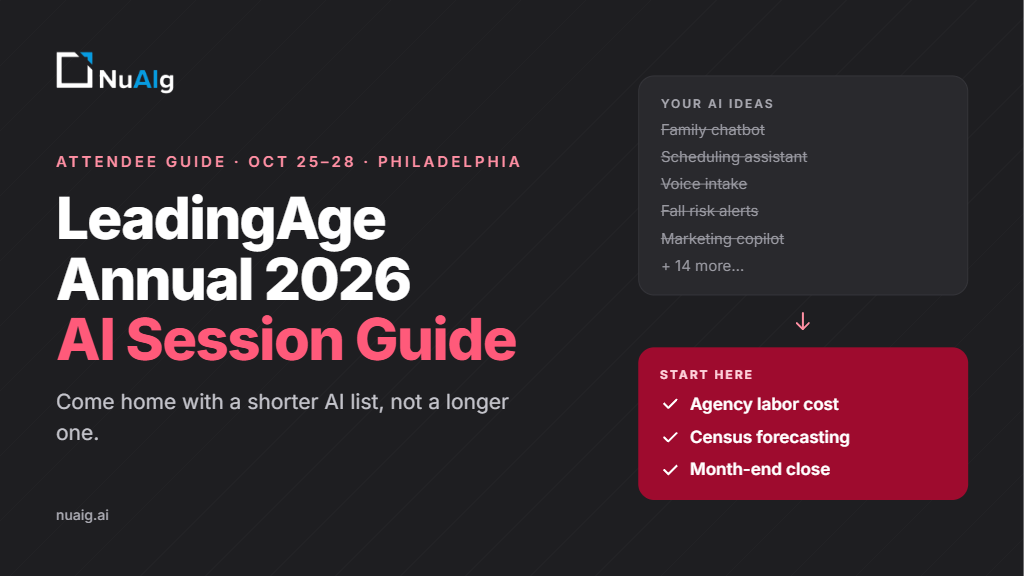
Four days. More than 150 education sessions. An expo floor full of AI demos. If you’re attending the LeadingAge Annual Meeting in Philadelphia, October 25 to 28, you’ll hear more about AI in one week than most teams hear all year.
Most senior living leaders come home from that kind of week with more AI ideas than they arrived with, and no clearer sense of which one to start with.
Here’s how to make this year different.
What’s on the AI Agenda This Year
LeadingAge expects over 6,000 aging services professionals at the Pennsylvania Convention Center. Technology has a big footprint on the program this year:
- 24 technology-focused sessions, half of them on a dedicated Aging Services Technologies track
- A keynote from Wharton professor Ethan Mollick on leading in the age of AI
- A LeadingAge CAST networking session
Sessions run from AI for measuring resident well-being, to sales and marketing, to agentic AI for cognitive health. That’s a lot of good content. It’s also a lot to sort through.
Before You Go: Bring Problems, Not Ideas
The leaders who get the most out of a conference arrive with a short list of problems, not a long list of AI ideas.
Before you leave, write down the three operational issues your leadership team talks about most. Agency labor costs. Census and occupancy forecasting. A month-end close that takes too long. Incident trends you only see after the fact.
Then use every session and booth visit to test one question: does this help with one of our three problems? If not, it goes on a “later” list, no matter how impressive the demo was.
In Sessions: Listen for How, Not Just What
Panels and case studies are most useful when you listen past the outcome to the process. Pay attention to:
- What data it needed. Did they have to clean up or connect census, EHR, or HR data first?
- Who did the work. Internal staff, a partner, or a vendor? How much frontline time did it take?
- How long before results. Weeks, months, or a full budget cycle?
- What they’d do differently. This is often the most valuable answer in the room.
On the Expo Floor: Five Questions to Ask Any AI Vendor
AI demos are built to impress. These questions help you see what it would take to make one work in your organization:
- What data from our systems (PointClickCare, MatrixCare, payroll, finance) does this need, and how clean does it have to be?
- What does our frontline staff have to learn or change to use it?
- Who maintains it after go-live, and what does that cost after the pilot?
- How do your current customers measure success, in hours, dollars, or outcomes?
- What does a realistic first 90 days look like for an organization our size?
If the answer to the first question is “it depends on your data,” that’s honest, and it’s common. Fragmented data is one of the most frequent blockers we see. That’s why data strategy work often has to come before the AI tools themselves.
When You Get Home: Sort Before You Act
The week after the conference is when good intentions fade. Before your notes disappear into a drawer, sit down with your leadership team and sort every idea into three buckets: now, next, and later.
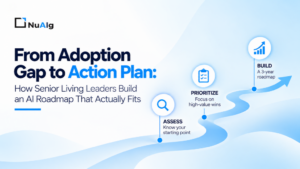
“Now” should only include ideas that address one of your three problems and run on data you already have. For a step-by-step look at turning that list into a phased plan, see our recent post, From Adoption Gap to Action Plan: How Senior Living Leaders Build an AI Roadmap That Actually Fits.
Where to Find NuAIg in Philadelphia
If “where do we start?” is the question your team keeps coming back to, add two stops to your agenda.
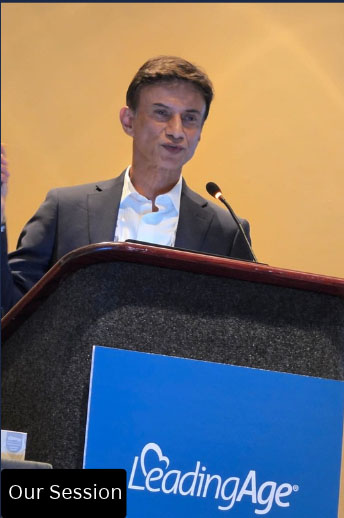
Session 2-B: Build a Strategic Roadmap for AI Adoption
Sunday, October 25 | 2:45 to 3:45 PM
NuAIg CEO Vipin Bhardwaj joins operator leaders from United Methodist Communities, Landis Communities, and Otterbein SeniorLife.
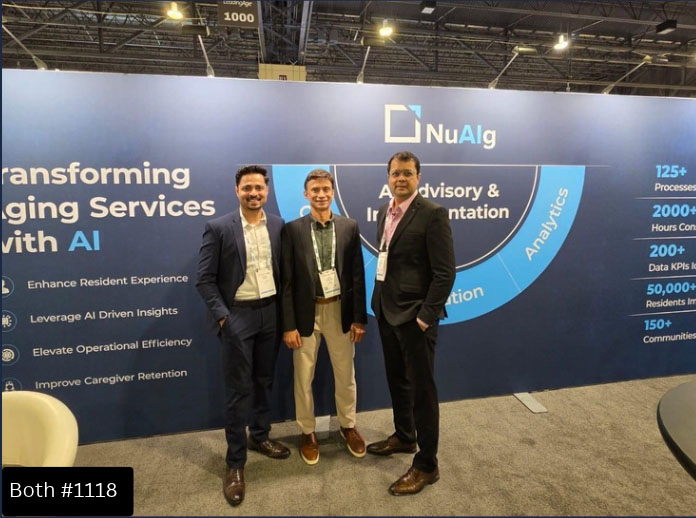
Booth #1118
Bring your list. No pitch, just a practical conversation about what an AI Assessment could look like for an organization your size. You can also reserve a time ahead of the event on our LeadingAge Annual 2026 event page.