The LeadingAge Ziegler 200 just published its 23rd annual report, ranking the 200 largest not-for-profit senior living systems in the country. Buried in the technology section, on page 17, is a number worth sitting with: only 47% of these organizations use advanced analytics tools. Only 43% have implemented robotic process automation.
These are not small, under-resourced communities. The LZ 200 is a list of the biggest, best-capitalized nonprofit systems in senior living, the ones with the scale to invest first. If fewer than half of them have moved past basic reporting into real analytics, the AI conversation in this sector is still much earlier than the conference stage and vendor pitch decks suggest.
What's actually widespread, and what isn't
The report’s technology breakdown tells a clear story once you line the numbers up. Adoption is high, 78% on average, for electronic point-of-care documentation and EHR systems. Care coordination software sits at 61%. Resident engagement and social connectedness technology is also at 61%. These are the operational systems of record, largely mature, often payer- or regulation-driven.
Then the numbers drop. Advanced analytics: 47%. Robotic process automation: 43%. The gap isn’t access to technology. It’s what happens after the data is captured. Most LZ 200 organizations have digitized their operations. Far fewer have turned that data into something leadership can act on.
This lines up with a separate finding from Ziegler’s second CTO Hotline survey, covered by Senior Housing News: confidence among senior living CTOs in deploying AI for targeted use cases actually fell this year, from 49% to 38%. Investment intentions are climbing (65% plan to invest more in large language model use, 52% in analytics platforms), but confidence in execution is not keeping pace. Seventy-six percent of respondents also cited platform fragmentation as a live problem. Systems don’t talk to each other, so even organizations with the budget for AI are stalling on the step before it: getting a clean, unified view of their own data.
Where the gap actually needs closing
For CIOs, COOs, and CFOs benchmarking against the LZ 200, the honest read isn’t “we’re behind everyone.” It’s “most of the sector is stuck at the same step.” That step is usually data, not ambition. Before analytics or automation can work, an organization needs its EHR, HR, and finance platforms harmonized into something queryable. This is the gap NuAIg’s Data Strategy and Services work is built to close: aggregating data across PointClickCare, MatrixCare, UKG, and similar systems into a single, reliable source leadership can actually query, rather than reconcile by hand every month.
Once that foundation exists, the RPA number becomes easier to move. Robotic process automation and other Intelligent Automation tools are most effective when they’re pulling from clean, connected data rather than another manual export. And for organizations ready to go further than automation into predictive or agentic use cases, that same foundation is what makes AI Agents & CoPilots viable rather than experimental.
None of this requires an organization to out-invest the largest systems in the country. It requires sequencing the work correctly, data foundation first, so that RPA and analytics investments actually produce the 47% or 43% adoption they’re aiming for, instead of stalling at the pilot stage like so many peers.
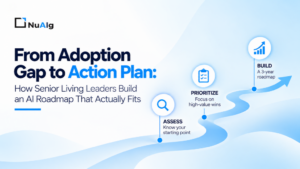
If your organization is trying to figure out where it actually sits on this curve, and what the next concrete step looks like, an AI & Digital Enablement Sprint is designed to answer exactly that in a matter of weeks, using your own operational data rather than industry averages.