In our last post, we looked at what the 2026 LeadingAge Ziegler 200 revealed: even among the largest not-for-profit senior living systems, fewer than half use advanced analytics, and fewer still have implemented robotic process automation. The question that follows, and the one we hear in almost every leadership meeting, is simpler: so where do we actually start? The answer is a senior living AI adoption roadmap built around your own starting point.
It is a fair question. Every vendor says their tool is the starting point. Every conference has an AI track. And every organization starts from a different place, with a different team, budget and appetite for change.
The problem is not interest. It is capacity.
The 2026 CTO Hotline from Ziegler Link•age Funds and LeadingAge CAST puts numbers to what operators feel. Sixty-five percent of surveyed technology leaders plan to invest more in large language model tools this year, and 52% in data analytics platforms. When asked what holds new technology back, they named staff capacity or expertise (49%), funding (46%), time (46%) and resistance to change (40%). And 76% said fragmented technology platforms make a holistic experience for staff and residents harder to deliver.
Those respondents are technology leaders at not-for-profit providers, many of them organizations large enough to have a dedicated CTO. For a midsize or smaller community without that seat at the table, the same constraints usually bite harder, not softer.
That is why the organizations making real progress are not the ones buying the most tools. They are the ones sequencing the work. They understand where they stand, pick a few wins their team can absorb, and commit to a plan longer than one budget cycle.
Step one: know your real starting point
Most AI conversations skip this step. Leadership agrees AI matters, a vendor demo looks promising, and a pilot starts before anyone has checked how clean the census data is, whether the EHR and HR systems talk to each other, or how much change the frontline can realistically take on this quarter.
A structured readiness assessment looks at your AI, data and technology maturity alongside the people and processes that have to carry any change. The goal is not a score.
It is an honest baseline that shows the strengths to build on and the gaps that will quietly sink a pilot if no one names them. This is exactly what NuAIg’s AI Assessment is built to do in 8 to 10 weeks, using your own operational data rather than industry averages.
Step two: find wins your team can actually absorb
Once the baseline is clear, the list of use cases gets shorter and better. The strongest early candidates usually share three traits. They address a problem leadership already tracks, like agency labor, census, incident trends or month-end reconciliation. They run on data you already capture. And they do not ask overloaded staff to learn a new system before they see a benefit.
For many organizations, that points first to back-office work: billing reconciliation, onboarding paperwork, or reporting pulled by hand from PointClickCare, MatrixCare and finance systems. Intelligent Automation can remove hours from these without touching resident care. Where platform fragmentation is the real blocker, unifying those sources through a data strategy often has to come first.
Step three: build a three-year plan that survives real life
A pilot is not a strategy. Quick wins buy credibility, but lasting progress needs a phased roadmap that accounts for budget cycles, governance, change management and the reality that staff capacity is finite. The CTO Hotline found 59% of technology leaders now intend to update their strategic IT plan at least once a year, which is a sign the sector is treating this as ongoing work rather than a one-time project.
Three years is long enough to sequence the data foundation, automation and more advanced AI in the right order. It is also short enough to stay tied to outcomes your board can see.
Hear it from operators who have been through it
If this is the conversation your leadership team is having, we will be going much deeper at the 2026 LeadingAge Annual Meeting in Philadelphia.
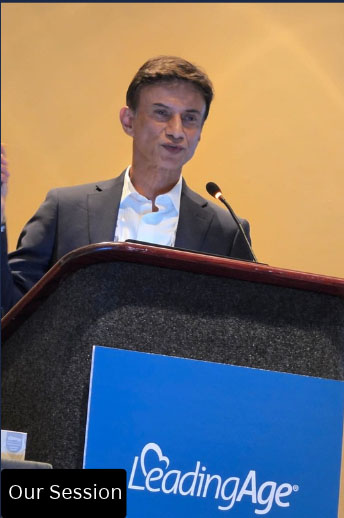
On Sunday, October 25, from 2:45 to 3:45 p.m., NuAIg CEO Vipin Bhardwaj joins Mark Lenhard (CEO, United Methodist Communities), Evon Bergey (COO, Landis Communities) and Catherine Chiovaro (VP Workforce Management & Strategy, Otterbein SeniorLife) for “Build a Strategic Roadmap for AI Adoption.” It is a candid panel on how a focused AI Assessment turned the noise into a realistic three-year plan, told from the operator’s side of the table.
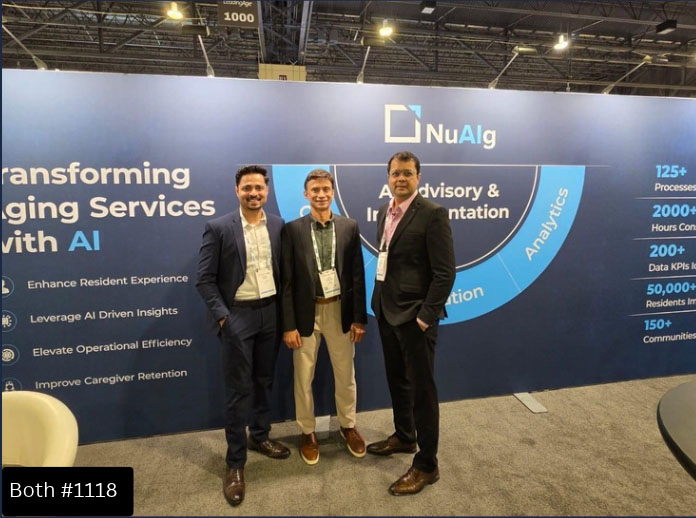
Can’t make the session? Stop by Booth 1118 between sessions, and we will walk through what an 8 to 10 week AI Assessment looks like for an organization your size, no pitch required. You can also reserve a meeting ahead of the event on our session page.