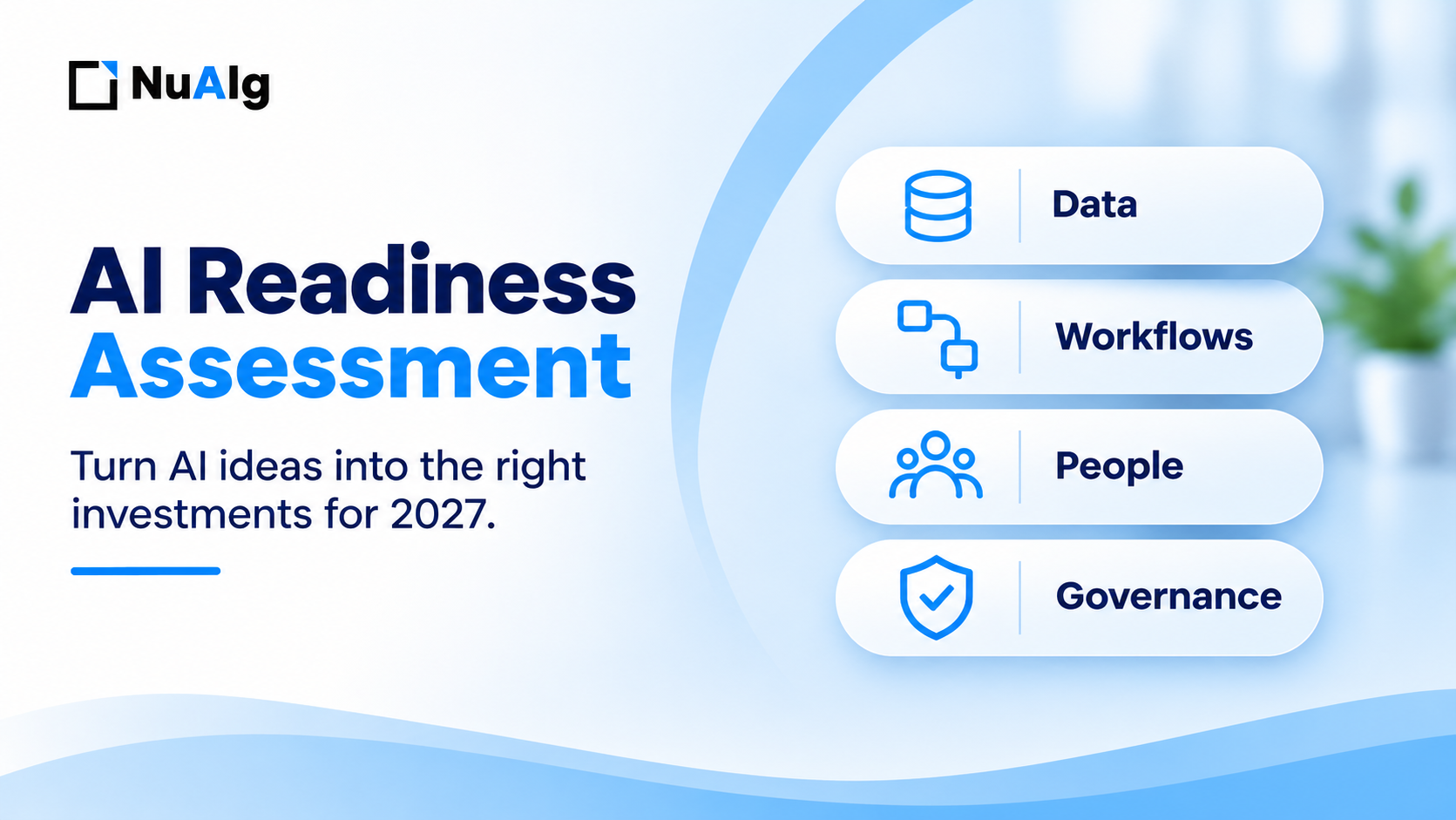
An AI readiness assessment is a short, structured review of your data, systems, and staff workflows that shows where AI will save time or money first, and what needs fixing before you buy any tool. If your 2027 budget includes any AI spending, the assessment should come before it, because it tells you which of those line items are worth funding.
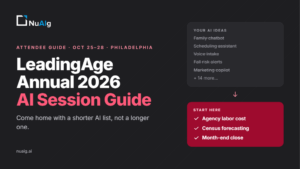
Most senior living leaders came back from this fall’s conference season with a longer AI list than they left with. Every agenda had an AI track, the expo floors were full of demos, and very few of those ideas came with a clear answer to “where do we start?” The industry data tells the same story. In the 2026 McKnight’s State of Technology Survey, 40.5% of senior living and care respondents said their organizations were just beginning to explore AI, and only 2.4% described a mature AI strategy.
The gap between interest and action is rarely about the technology. It is about not knowing which problem to solve first.
What does an AI readiness assessment look at?
A good assessment starts with your operations, not a product catalog. It typically covers four areas:
Data. Do your EHR, CRM, scheduling, and finance systems talk to each other? Can you pull a cross-department report without someone rebuilding it in Excel?
Workflows. Where do staff hours actually go? Admissions paperwork, month-end reconciliation, incident documentation, and PBJ reporting are common places to look.
People. Who will champion the change, how much training capacity does your team have, and will frontline staff trust the new process?
Governance. How will resident and employee data be protected, and who approves a tool before it touches care?
When data turns out to be the main blocker, which it often is, the fix is usually a data strategy and integration effort, not another software purchase. NuAIg’s Data Strategy and Services team handles that work in the same engagement, so the findings don’t sit on a shelf.
What should you have at the end?
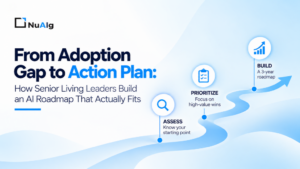
Not a slide deck of possibilities. You should walk away with a short, ranked list: a few quick wins your team can absorb now, the foundational fixes that have to come first, and the ideas that aren’t worth pursuing yet. The most useful assessments also estimate the value of each item in terms your team can measure, such as staff hours, errors avoided, or days saved, using your own data rather than industry averages.
Why it belongs in the 2027 budget, not after it
Budget season is when this matters most. Operators are setting 2027 rates carefully, and families are more price conscious than in past years. Every new line item has to justify itself.
Funding an AI tool before you know whether your data can support it is the expensive way to find out. An assessment turns a vague “AI initiative” line into two or three specific problems, each with an owner and a way to measure success.
One multi-site operator we work with took exactly this route. Instead of starting with a dashboard, the team listed its toughest cross-functional problems, including incident patterns, staffing pressure, and census. They ranked them by impact and judged success by whether each problem shrank, not by how much AI they used.
That approach also makes the board conversation easier. “We are funding a fix for incident follow-up across our communities” is a stronger request than “we are investing in AI.”
Can you do it yourself?
Partly. A self-check is a good first step, and our 10-point AI readiness checklist is a quick place to start. If you answer “no” to questions about integrated systems or a data governance policy, look deeper before deploying anything. An outside assessment adds what is hard to see from the inside: an objective view of how work actually moves between departments, and a team that has seen the same patterns at other senior living organizations.
The natural next step
If your 2027 plan includes AI, or you suspect it should, start with the problem list, not the tool list. NuAIg’s AI & Digital Enablement Sprint is built for exactly this: a current-state review, gap analysis, and impact evaluation grounded in your own workflows and data, ending in a prioritized roadmap your leadership team can fund with confidence.